

Invasive Plants in Dorset, Devon and Hampshire: A Guide to Identification, Impact and Management
Invasive plants are becoming an increasingly important environmental issue across Dorset, Devon and Hampshire. Non-native species such as Japanese knotweed, Himalayan balsam and giant hogweed are spreading through river systems, woodlands, roadsides and residential areas throughout southern England.
While many invasive plants were originally introduced as ornamental garden species, they now pose significant challenges for biodiversity, land management and property maintenance.
Across the South West, councils, conservation groups and landowners are investing substantial resources into monitoring and controlling invasive plant species to protect native ecosystems and reduce long-term environmental impact.
What Are Invasive Plants?
Invasive plants are species introduced outside their natural range that spread rapidly and outcompete native vegetation.
Unlike native species, invasive plants often grow aggressively because they have few natural predators or controls within the UK environment. Over time, they can dominate habitats, reduce biodiversity and alter ecosystems.
Common impacts include:
Suppression of native wildflowers and plants
Increased riverbank erosion
Disruption to wildlife habitats
Challenges for agriculture and forestry
Structural issues around hard surfaces and drainage systems
Expensive long-term management requirements
Under the Wildlife and Countryside Act 1981, it is an offence to plant or otherwise cause certain invasive species to grow in the wild.
Japanese Knotweed in Dorset, Devon and Hampshire
What Is Japanese Knotweed?
Japanese knotweed is one of the UK’s best-known invasive plant species. Originally introduced from East Asia during the nineteenth century, it is now widespread across many parts of England.
The plant spreads through underground rhizomes that can regenerate from very small fragments, making control particularly challenging.
How to Identify Japanese Knotweed
Key identifying features include:
Hollow bamboo-like stems
Bright green shield or shovel-shaped leaves
Cream-coloured flower clusters in late summer
Dense growth forming large stands
Red or purple shoots during spring growth
Japanese knotweed typically grows rapidly between April and September and can reach heights exceeding three metres.
Environmental and Property Impact
Japanese knotweed can:
Crowd out native vegetation
Affect access routes and unmanaged land
Grow through cracks in hard surfaces
Complicate development and landscaping projects
Influence mortgage and property survey processes
Because of these issues, professional management plans are often required during property transactions involving affected land.
Himalayan Balsam Along Southern England Rivers
What Is Himalayan Balsam?
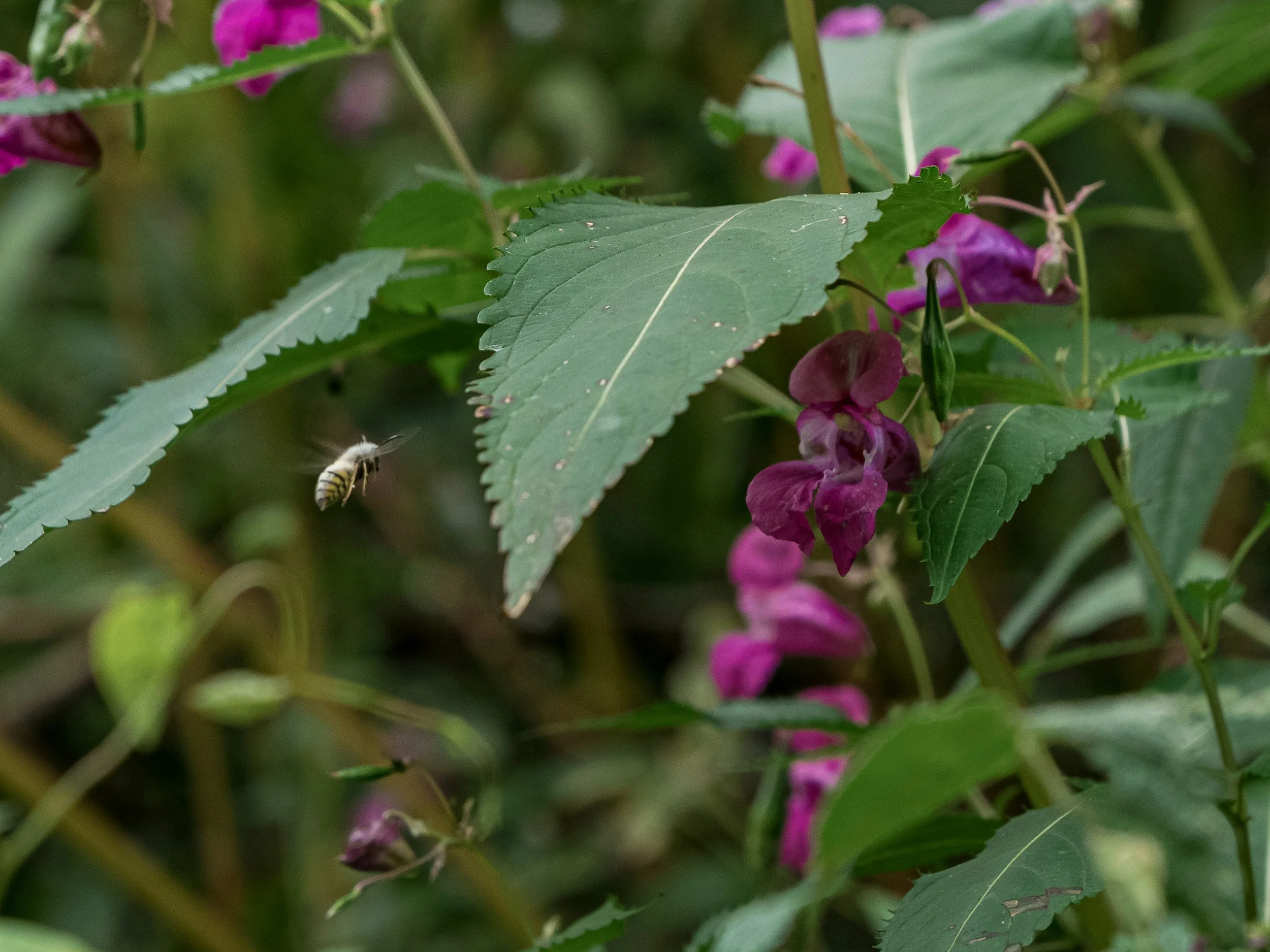
Himalayan balsam is a fast-growing annual plant commonly found near rivers, streams, wetlands and damp woodland areas.
Originally introduced as an ornamental garden species, it has become widespread throughout much of the UK countryside.
How to Identify Himalayan Balsam
Typical features include:
Pink or purple helmet-shaped flowers
Tall hollow stems
Lance-shaped leaves arranged in whorls
Seed pods that burst explosively when touched
Plants can grow over two metres tall during summer months.
Ecological Impact
Himalayan balsam spreads quickly along waterways because seeds are easily transported downstream.
Environmental concerns include:
Reduction of native riverside plant diversity
Increased soil erosion after winter dieback
Competition with native wildflowers
Altered habitats for insects and wildlife
Many conservation projects in Dorset and Devon focus on coordinated river catchment management to reduce re-infestation.
Giant Hogweed in Devon, Dorset and Hampshire
What Is Giant Hogweed?
Giant hogweed is a large invasive plant species introduced to Britain as an ornamental plant during the Victorian period.
It is now commonly found along riverbanks, waste ground and unmanaged land.
How to Identify Giant Hogweed
Identification features include:
Very large white umbrella-shaped flower heads
Thick stems with purple blotches
Coarse white hairs along stems
Large jagged leaves
Heights reaching up to five metres
Public and Environmental Concerns
Giant hogweed is notable because its sap can cause skin reactions when exposed to sunlight.
For this reason, professional handling and careful management are recommended.
Ecologically, dense growth can also suppress native vegetation and reduce habitat diversity.
Other Invasive Plants Found in Southern England
Rhododendron
Rhododendron can dominate woodland floors and prevent regeneration of native tree species.
New Zealand Pigmyweed
This aquatic invasive species forms dense mats in ponds, lakes and waterways, reducing oxygen levels and affecting aquatic ecosystems.
Running Bamboo
Running bamboo is becoming an increasing concern in residential areas due to its extensive underground rhizome system and rapid spread into neighbouring properties.
Why Invasive Plants Spread Successfully in Dorset, Devon and Hampshire
Several regional factors support invasive plant growth across southern England.
Mild Climate Conditions
Warmer temperatures and wet winters create favourable growing environments for many non-native species.
Extensive River Systems
Rivers and streams allow seeds and plant fragments to spread rapidly across large areas.
Historic Garden Introductions
Many invasive species originated from ornamental planting in private estates and gardens.
Soil Movement During Construction
Transporting contaminated soil can unintentionally spread invasive plant fragments between sites.
Managing Invasive Plants Responsibly
Correct Identification Is Essential
Many invasive species resemble native plants during early growth stages. Accurate identification helps avoid unnecessary removal and ensures appropriate treatment.
Avoid Improper Disposal
Improper cutting, composting or fly-tipping can accelerate spread.
Some invasive plant material must be disposed of under controlled waste regulations.
Use Appropriate Control Methods
Management options may include:
Herbicide treatment
Repeated cutting programmes
Excavation and removal
Controlled grazing in some environments
Long-term ecological restoration
Different species require different strategies and timescales.
Monitor Regrowth
Many invasive plants regenerate from underground roots or small fragments, meaning monitoring and follow-up treatment are often necessary for several years.
The Importance of Early Intervention
Early detection remains one of the most effective ways to reduce long-term environmental and financial impact.
Small infestations are generally far easier and less expensive to manage than established colonies.
Public awareness, responsible gardening and coordinated local management all play important roles in reducing spread across Dorset, Devon and Hampshire.
Conclusion
Invasive plants are an increasingly important issue for landowners, conservation groups and local communities across southern England.
Understanding how to identify species such as Japanese knotweed, Himalayan balsam and giant hogweed helps support more effective management and environmental protection.
As climate conditions continue to change and land use pressures increase, education and early intervention will remain essential tools in protecting native habitats and biodiversity throughout Dorset, Devon and Hampshire.
Make it stand out
Whatever it is, the way you tell your story online can make all the difference.